














Vintage camping style works best when you choose durable clothes, layered outfits, and sun safe skincare. Beginners should focus on comfort, weather protection, and simple skin care that works outdoors.
What Vintage Camping Style Means
Vintage camping style uses clothing and gear that feel classic, practical, and timeless. It usually includes earth tones, cotton shirts, wool layers, sturdy boots, canvas bags, and simple accessories. The goal is not only to look good. The goal is to dress in a way that works well around tents, campfires, trails, and changing weather.
For beginners, this style is useful because it blends well with outdoor needs. A vintage look can still be modern, clean, and easy to wear. The best choices are pieces that are comfortable, breathable, and strong enough for travel, walking, and sleeping outdoors.
When planning a camping trip, style should never come before safety. Clothing must protect the body from sun, wind, cold, and insects. Skincare also matters because outdoor skin faces more exposure than normal daily life.
For more style inspiration and timeless outdoor fashion ideas, explore the Northshoretimingonline Fashion Archives for updated vintage looks and camping outfit trends.
Best Vintage Clothing Choices for Camping
The best vintage camping outfits use simple pieces that can be layered. Layers help you stay warm in the morning and cool in the afternoon. They also make it easier to adjust when weather changes.
Cotton and linen shirts are good for warm days because they feel light and breathable. Flannel shirts work well for cooler weather. Wool sweaters and cardigans are useful in the evening because they hold warmth even when the air feels damp.
For bottoms, straight leg trousers, cargo pants, and durable jeans are practical choices. They protect the legs better than thin fashion pants. They also match the classic camping look. If the weather is hot, knee length shorts made from strong fabric can work well too.
Footwear should be sturdy. Leather boots, hiking boots, or strong canvas shoes are better than thin fashion shoes. Good shoes help prevent blisters, slips, and foot pain.
A hat is also important. A wide brim hat or a classic cap can protect the face and eyes from sun exposure. Sunglasses are useful for bright daylight, especially near water or open fields.
How to Build a Comfortable Camping Outfit
Comfort matters more than appearance when you are outdoors for many hours. A good camping outfit should move with the body and keep skin protected.
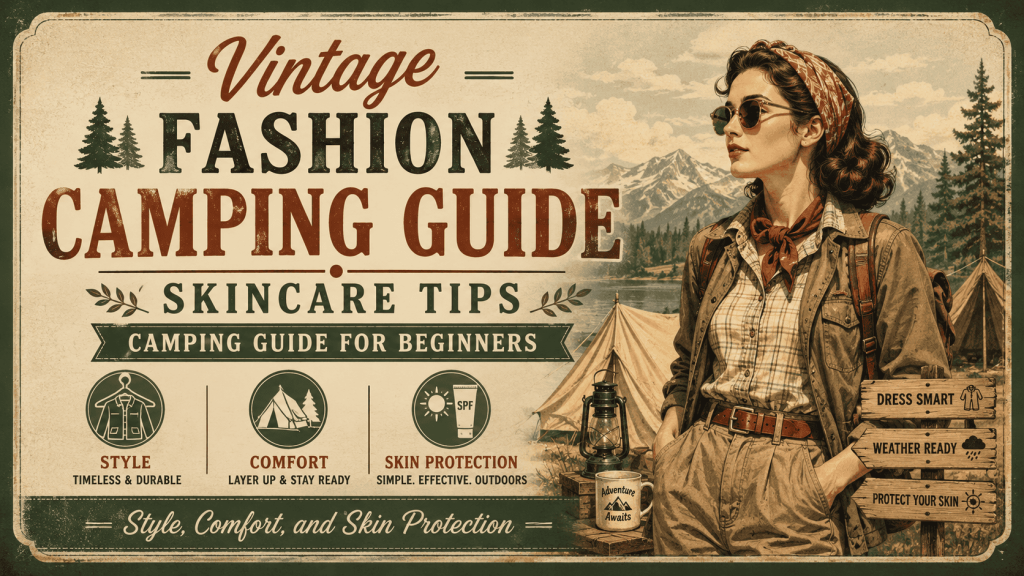
Choose soft inner layers first. A breathable undershirt can reduce sweat buildup and help prevent irritation. On top of that, add a shirt or sweater that suits the temperature. Keep the outer layer ready for wind or rain. A light jacket or waxed cotton coat can fit the vintage theme while still offering useful protection.
Avoid clothing that is too tight. Tight waistbands, stiff collars, and narrow shoes can cause discomfort very quickly on a camping trip. Loose but well fitted clothing is the safest choice. It allows easier movement when setting up a tent, carrying bags, or walking on uneven ground.
It is also smart to choose fabrics that dry quickly. Camping often includes dew, light rain, spilled water, or sweat. Wet fabric can lead to discomfort and skin irritation. Even a classic outfit should still work in real outdoor conditions.
Skincare Tips for Camping Beginners
Skin protection is one of the most important parts of camping preparation. Sun, wind, dust, sweat, and smoke from campfires can all affect the skin. A simple routine works best.
Clean skin before leaving. Wash your face and hands with a gentle cleanser. Do not use harsh products right before a trip because they can make skin more sensitive outdoors.
Use sunscreen every morning. Pick a broad spectrum sunscreen with at least SPF 30. Apply it to the face, neck, ears, and any exposed skin. Reapply during the day, especially after sweating or swimming. This is important even on cloudy days because UV rays can still reach the skin.
Carry lip balm with SPF. Lips can dry out fast in sun and wind. Many beginners forget lip care, but it is one of the easiest ways to avoid dryness and cracking.
Moisturize lightly before bed. Camping air can be dry, especially at night. A simple moisturizer can help protect the skin barrier. Choose a fragrance free product if possible.
Keep hands clean. Use hand sanitizer or wash hands with soap and water when available. Dirty hands can transfer bacteria to the face and cause irritation.
Do not use heavy makeup if the trip is active. Thick products can mix with sweat and clog pores. If makeup is necessary, choose minimal and breathable products.
Essential Camping Skincare and Style Packing List
The table below shows basic items that help beginners stay stylish, comfortable, and protected.
| Item | Why It Helps | Best Type for Beginners |
|---|---|---|
| Cotton shirt | Breathable and simple | Light, loose fit |
| Flannel shirt | Good for layering | Soft and medium weight |
| Wool sweater | Keeps warmth | Basic neutral color |
| Durable pants | Protects legs | Straight leg or cargo |
| Strong shoes | Supports walking | Boots or hiking shoes |
| Wide brim hat | Protects face and neck | Lightweight and foldable |
| Sunglasses | Reduces eye strain | UV protection lenses |
| Sunscreen SPF 30 or higher | Protects from sunburn | Broad spectrum |
| Lip balm with SPF | Prevents dryness | Small and easy to carry |
| Moisturizer | Supports skin barrier | Fragrance free |
| Gentle cleanser | Removes sweat and dirt | Travel size bottle |
How to Protect Skin in Sun, Wind, and Smoke
Camping often exposes the skin to several stress factors at the same time. Sunburn is the most common issue, but wind and smoke can also cause problems.
Sun protection starts with clothing. Long sleeves, hats, and closed shoes reduce direct exposure. Shade should be used whenever possible. A tarp, canopy, or tree cover can make a big difference during midday.
Wind can dry the skin fast. This is why moisturizers and lip balm are important. They help keep moisture in the skin and reduce roughness.
Campfire smoke can irritate the eyes and skin. Try not to sit too close to smoke. If the wind shifts, move your seat. Wash your face after long exposure to smoke so dirt and ash do not stay on the skin.
Insects can also affect skin health. Wear light but covered clothing in areas with many bugs. Use insect repellent if needed, and follow product instructions carefully. Do not apply sunscreen and insect repellent in a way that blocks both from working correctly. Apply them in the right order based on the label directions.
Best Fabrics for Vintage Camping
Fabric choice matters more than many beginners expect. Some fabrics feel stylish but do not work well outdoors. Others are practical and still match the vintage look.
Cotton is soft, breathable, and easy to wear. It is good for mild weather, but it can stay damp for a long time if it gets wet. This makes it less ideal for very rainy trips.
Linen is cool and airy. It works well in warm weather and gives a classic old style look. It wrinkles easily, but that is not a problem for camping.
Wool is excellent for cooler conditions. It keeps warmth even when the air is slightly damp. This is one reason wool has long been used for outdoor clothing.
Canvas and denim are durable and fit the vintage camping theme well. They are useful for jackets, bags, and pants. The tradeoff is that they can feel heavier than lighter fabrics.
Synthetic fabrics can be helpful too, especially for base layers or rain protection. They may not look as vintage, but they improve comfort and dryness.
Simple Grooming and Hygiene for the Campground
Good hygiene helps the skin stay healthy during a trip. It also makes camping more comfortable.
Bring a small toiletry kit. Include a toothbrush, toothpaste, cleanser, moisturizer, sunscreen, lip balm, hand sanitizer, and a soft towel. Keep everything in a waterproof pouch so it stays clean.
Use water wisely. If there is no full wash area, use a small amount of clean water with gentle products. Avoid over washing the face because that can remove natural oils and increase dryness.
Change out of sweaty clothes when possible. Wet clothing can cause skin irritation and discomfort. A dry shirt and clean socks can make a big difference after a long day outside.
Sleep on clean fabric. Use a sleeping bag liner or clean pillow cover if possible. This helps reduce dirt and sweat buildup on the skin overnight.
Weather Based Camping Style and Skin Care Guide
Different weather calls for different clothing and skin care choices.
| Weather | Style Focus | Skin Protection Focus |
|---|---|---|
| Hot and sunny | Light shirts, hats, breathable pants | Sunscreen, lip balm, shade |
| Cool and dry | Layers, wool sweaters, boots | Moisturizer, lip care |
| Windy | Close fitting layers, jacket, covered skin | Moisturizer, barrier care |
| Rainy | Waterproof outer layer, quick drying clothes | Gentle cleansing, dry skin care |
| Cold nights | Thermal base layers, warm outerwear | Richer moisturizer, hand and lip care |
This kind of planning helps beginners avoid common mistakes. Many people pack for the daytime and forget the night. In camping, the temperature can change very quickly after sunset.
Common Camping Mistakes to Avoid
A common mistake is choosing clothes only for appearance. A vintage look should still support movement and weather protection. Thin shoes, tight clothing, and delicate fabrics can cause problems fast.
Another mistake is skipping sunscreen because the weather looks mild. UV exposure can still happen on cool or cloudy days.
Many beginners also forget to reapply lip balm and sunscreen. One application in the morning is not always enough for a full day outside.
Using too many skin products is also unhelpful. Camping is not the place for a long routine. A few good basics work better than many products that are hard to carry.
Poor packing is another issue. Keep essentials easy to reach. Sunscreen, water, lip balm, and a hat should not be buried at the bottom of a bag.
How to Keep the Look Timeless and Practical
The best vintage camping style is simple. Neutral colors like beige, olive, brown, cream, navy, and grey work well together. These colors also hide dirt better than very bright clothes.
Accessories should stay useful. A canvas backpack, leather belt, simple watch, or folded scarf can support the look without making it feel heavy. Do not add items that are hard to carry or hard to clean.
Keep the outfit balanced. If the shirt is bold, keep the pants simple. If the jacket has a strong vintage feel, choose plain shoes and a clean hat. This creates a neat look that still feels natural outdoors.
Skin protection should follow the same rule. Keep it simple, consistent, and easy to repeat each day. A dependable routine is better than a complicated one that gets skipped.
Camping Starter Checklist for Style and Skin Safety
Before leaving, make sure these items are packed and ready.
| Category | Must Have Items |
|---|---|
| Clothing | Shirt, layer, pants, socks, boots |
| Outerwear | Jacket, rain layer, warm layer |
| Accessories | Hat, sunglasses, backpack |
| Skin care | Sunscreen, lip balm, moisturizer, cleanser |
| Hygiene | Towel, sanitizer, toothbrush, toothpaste |
| Comfort | Water bottle, spare socks, sleeping gear |
This checklist keeps the trip simple and organized. It also helps beginners avoid forgetting the items that matter most for comfort and skin health.
Camping with a vintage style works best when clothing, comfort, and skin protection all support each other. A good outfit looks classic, feels practical, and protects the body during every part of the trip.


