















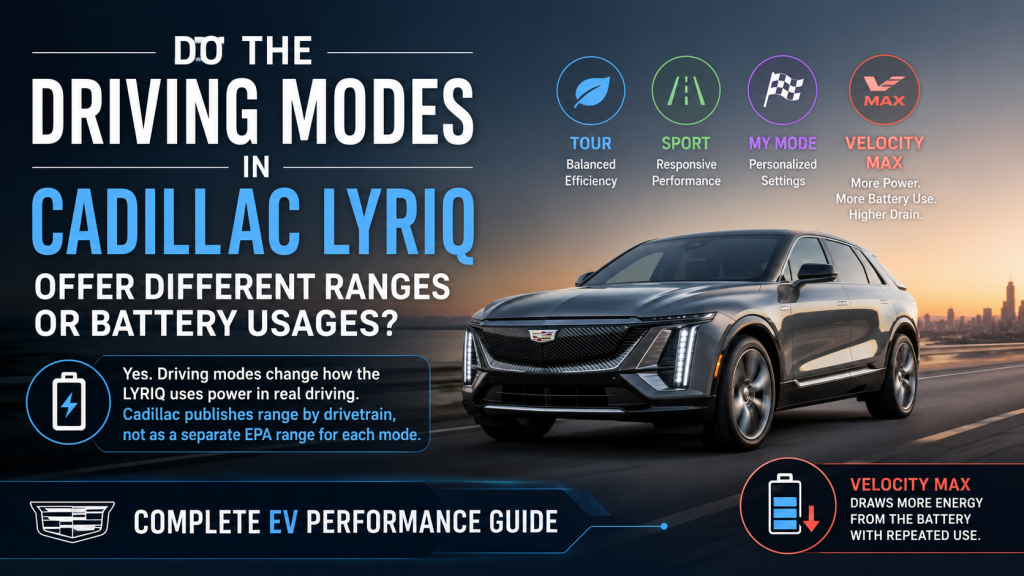
Yes. Cadillac’s driving modes change how the LYRIQ uses power in real driving, but Cadillac publishes range by drivetrain, not as a separate EPA range for each mode.
The clearest battery use difference comes from Velocity Max, which Cadillac says draws more energy from the battery than regular driving and can drain battery power with repeated use.
Driving Modes and Range at a Glance
| Mode | Main purpose | Battery and range effect |
|---|---|---|
| Tour | Everyday driving with smooth tuning | Cadillac describes this as the predominant everyday mode. It is the baseline setting for normal use, and Cadillac does not publish a separate EPA range for it. |
| Snow/Ice | Better control on slippery roads | It helps prevent wheel spin. Its goal is traction and stability, not a special range rating. |
| Sport | Sharper response and more road feel | Cadillac says it gives more immediate torque response and improved steering at higher speeds. In real driving, that can use more energy when acceleration is stronger. That is an inference from the mode description. |
| My Mode | Personal settings | Cadillac says it lets the driver change accelerator responsiveness, steering feel, braking responsiveness, and EV sound enhancement. Battery use depends on how the settings are chosen and how the vehicle is driven. That is an inference. |
| Velocity Max | Extra acceleration and power | Cadillac says it unlocks additional horsepower and torque and draws more energy from the battery than regular driving. Repeated use can drain battery power. |
What Cadillac Says the Driving Modes Do
Cadillac says Driver Mode Control can be changed at any time, even while the vehicle is moving, and the exact modes available depend on the model and equipment. For LYRIQ, Cadillac lists Tour, Snow/Ice, Sport, and My Mode in its current owner information.
Cadillac’s own LYRIQ description says Tour is for everyday driving with smooth ride tuning, Snow/Ice is for slippery conditions, Sport is for a more immediate and connected drive feel, and My Mode lets the driver personalize accelerator response, steering feel, braking response, and EV sound. These are performance and feel changes first, not separate official range ratings. That last point is an inference based on Cadillac’s published range and mode information.
The Range Figures That Matter Most
Cadillac’s current LYRIQ materials list an EPA estimated range of up to 326 miles for single motor RWD models and up to 319 miles for dual motor AWD models. Cadillac also says the LYRIQ is designed for daily driving and long road trips, with charging support for home, work, and public charging.
That is why the published range difference for LYRIQ is mainly about drivetrain, not a separate number for each driving mode. Cadillac shows range by RWD and AWD setup, while the modes are described as changing tuning, traction, steering, braking, and power delivery. This is an inference from Cadillac’s published materials.
Tour Mode and Everyday Efficiency
Tour is Cadillac’s everyday mode for LYRIQ. Cadillac describes it as the predominant mode for normal driving, with tuning and calibration made for a smooth ride. That makes it the default choice when a driver wants calm, balanced behavior rather than stronger response.
Tour is also the best match for steady driving habits. A steady pedal, moderate speed, and smooth braking matter more to real range than the mode name alone. Cadillac does not publish a separate Tour range figure, so any range change in Tour comes from driving conditions and driver behavior rather than an official mode based EPA number. That is an inference from Cadillac’s materials.
Sport Mode and Battery Use
Sport mode is tuned for a stronger road feel. Cadillac says it gives more immediate torque response and improved steering at higher speeds. That means the vehicle reacts faster when the driver asks for power.
In daily use, Sport can lead to higher battery use if the driver accelerates harder or keeps the vehicle in a more aggressive pace for longer periods. Cadillac does not publish a separate Sport range number, so this is a practical result of the mode’s sharper tuning rather than an official EPA estimate. That is an inference from the mode description.
Snow and Ice Mode and Low Traction Driving
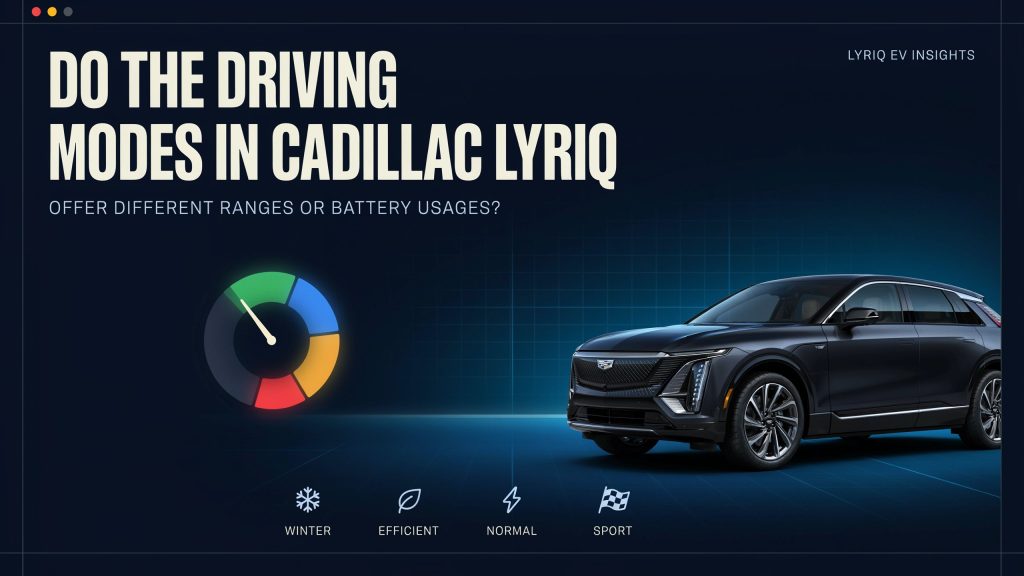
Snow and Ice mode is built for slippery conditions. Cadillac says it is intended to help prevent wheel spin in snow or on other slippery roads. That makes it a control and traction setting, not a performance mode aimed at speed.
Because traction control depends on road grip, battery use in this mode can vary a lot. A smoother road may use less energy than a poor surface, but heavy wheel slip can raise energy use. Cadillac does not publish a separate range rating for Snow and Ice mode, so the practical effect comes from road conditions and how hard the vehicle has to work to maintain grip. That is an inference.
My Mode and Personal Battery Use
My Mode is the most flexible everyday setting. Cadillac says it allows the driver to change accelerator responsiveness, steering feel, braking responsiveness, and Electric Vehicle Sound Enhancement.
That flexibility means battery use can change based on how the mode is set up. A softer accelerator response can help calm driving, while a sharper response can make the vehicle feel quicker. The mode itself does not create a published range figure. Instead, the range effect comes from the settings the driver chooses and the way the vehicle is driven. That is an inference from Cadillac’s description.
Velocity Max and the Strongest Battery Draw
Velocity Max is the mode most clearly tied to battery usage. Cadillac says it unlocks additional horsepower and torque from the battery and electric drive units, and it can drain battery power with repeated use. Cadillac also says this mode enables more aggressive power and acceleration.
On LYRIQ V models, Cadillac ties Velocity Max to the highest performance figures, including 615 horsepower and 3.3 second zero to 60 mph acceleration. That shows how strongly this mode changes the vehicle’s energy use. It is the mode most likely to shorten driving range when used often.
Readers interested in advanced electric vehicle technology and future transportation concepts may also enjoy learning about the Space Force Orbital Warship Carrier, a topic that explores emerging ideas related to space operations, propulsion systems, and next-generation aerospace capabilities.
One Pedal Driving and Regen On Demand
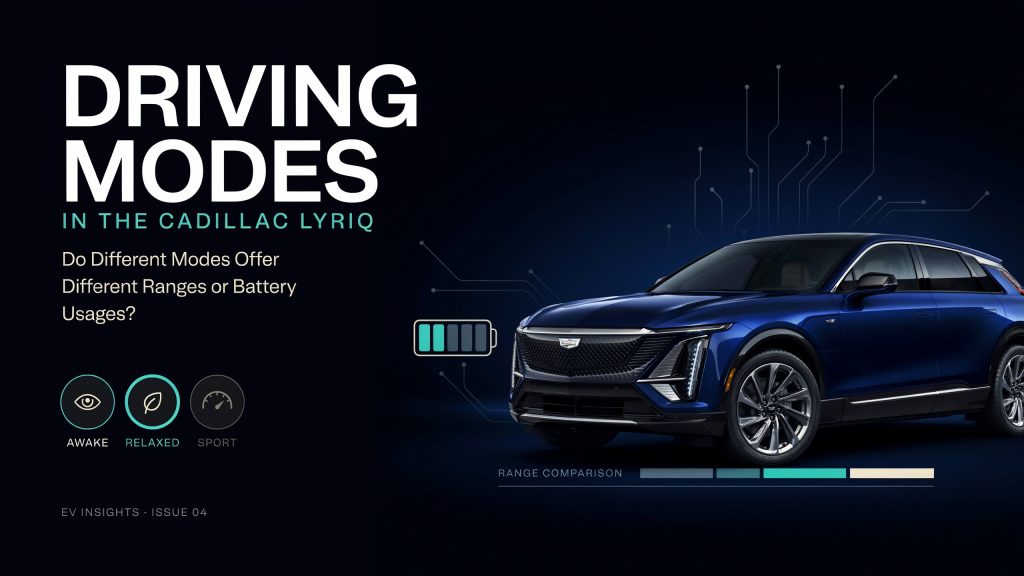
One Pedal Driving is not the same thing as a drive mode, but it affects battery usage. Cadillac says it lets the driver slow and stop the vehicle using only the accelerator pedal under normal conditions, with On, High, and Off settings. Cadillac also says it is not recommended on slippery roads and that steep hills may require more brake pedal use.
Regen On Demand works alongside One Pedal Driving. Cadillac says it uses a paddle on the back of the steering wheel to control how fast the vehicle slows down, and it can be used on its own or together with One Pedal Driving. Cadillac also labels regenerative braking as a way to conserve and capture braking energy for added range. These features can help recover energy during slowing, which supports efficiency.
Battery Habits That Support Range
Cadillac says it recommends charging the battery to 80 percent for daily use, then charging above 80 percent for longer trips when more range is needed. That advice is useful for both battery care and trip planning.
Cadillac also notes that actual range depends on factors such as temperature, terrain, battery age, loading, use, and maintenance in its LYRIQ V materials. So even when the driving mode stays the same, real range can change from day to day. That is why the safest way to think about LYRIQ range is this: drivetrain sets the official published number, while mode, speed, weather, and driving style shape real world battery use.
Drivers who enjoy long EV road trips may also want to explore the Best Wireless Earbuds Under 200 Dollars 2024 to improve entertainment, hands-free calling, and audio quality during charging stops and travel breaks.
Also Read: CnLawBlog Explained | Origins, Content, and Credibility


