















Space Force orbital warship carrier is not a confirmed public U.S. military program. In current public records, the Space Force focuses on space control, satellite operations, launch, missile warning, navigation, and space domain awareness.
What the Term Means
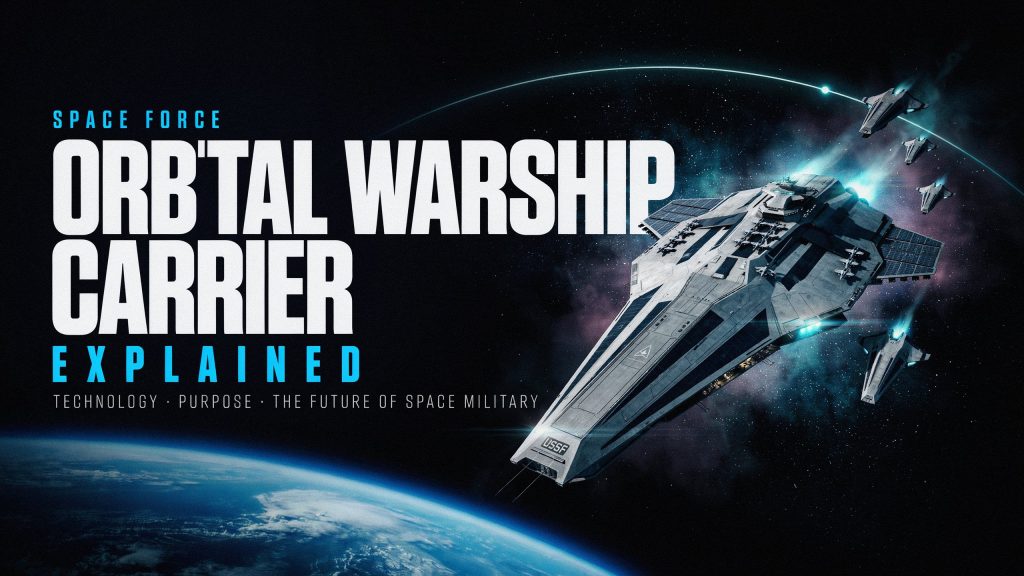
An orbital warship carrier would mean a large platform in space that carries smaller spacecraft, support vehicles, sensors, or defensive systems. In plain English, it would act like a space base or space mothership. That idea is still speculative in public U.S. defense sources, not an announced fielded system. The Space Force’s public mission is to secure U.S. interests in, from, and to space, not to operate a known carrier class warship in orbit.
The word carrier matters because it suggests persistence, lift, and control. In military terms, a carrier does not usually fight alone. It supports smaller assets and extends reach. Applied to orbit, that would mean a platform that can host, deploy, repair, refuel, or direct smaller space systems. That is a practical interpretation of the term, based on how the Space Force already describes space operations such as orbital warfare, electromagnetic warfare, and battle management.
What the Space Force Actually Does Now
The Space Force is a separate military branch under the Department of the Air Force. Its public mission is to secure the nation’s interests in, from, and to space. Official descriptions also say the service organizes, trains, and equips personnel to protect U.S. and allied interests in space and support the joint force.
Its public core functions include space superiority, global mission operations, and assured space access. The Space Force lists mission areas such as orbital warfare, electromagnetic warfare, space battle management, missile warning, satellite communications, positioning, navigation, timing, launch, range control, cyber, and space domain awareness. That is the real baseline for any discussion about future orbital warfighting systems.
Space Systems Command is the main acquisition arm for this work. Its public mission is to develop and field dominant space capabilities. Current public priorities include launch, satellite communications, missile warning, missile tracking, navigation, and other space systems used by the U.S. military. Recent SSC news also shows active work on protected tactical communications and national security launch contracts.
Similar lessons can be seen in the case of United Airlines Flight UA770 Emergency Diversion, where coordinated responses and real-time communication played a key role in maintaining passenger safety during an unexpected event.

How an Orbital Carrier Could Work
A real orbital carrier would need a strong power system, long life propulsion, thermal control, data links, docking ports, and robotic handling. It would also need autonomous navigation and a hardened command network. Without those systems, a carrier could not safely manage smaller spacecraft in orbit. This is an engineering inference from the functions the Space Force already values in launch, space domain awareness, cyber, and command and control.
A platform like this could store small satellites, host inspection drones, or provide repair support. It could also serve as a command node for distributed orbital operations. The reason this matters is simple. Space operations are fast, distributed, and dependent on secure links. The Space Force has already emphasized mission areas tied to missile warning, space battle management, satellite communications, and launch support, which are the same building blocks a carrier concept would need.
Main Technology Blocks
The first technology block is propulsion. An orbital carrier would need efficient engines for station keeping, relocation, and collision avoidance. Public Space Force materials do not describe a carrier platform, but they do show that assured access to space, launch operations, and sustained space systems are central to the service. That means propulsion and orbital mobility would be basic requirements, not optional extras.
The second block is sensing and space domain awareness. The Space Force already lists space domain awareness as part of assured space access and has built mission structure around missile warning, battle management, and orbital warfare. An orbital carrier would need to track objects, detect threats, and avoid collisions in a crowded orbital environment.
The third block is communications and command control. Space Systems Command and the Space Force both emphasize satellite communications, command and control, and cyber operations. A carrier in orbit would rely on secure data links to ground stations and to other spacecraft. Without this, it would be blind and vulnerable.
The fourth block is launch and sustainment. Space Force launch units manage DoD, NASA, and commercial launches from the East and West Coast Space Launch Deltas. That matters because any large orbital platform would need repeated launch support, replacement parts, and possibly modular expansion over time. The public record already shows a launch and sustainment structure, but not a warship carrier program.
Military Purpose
The military purpose of an orbital carrier would be to improve reach, resilience, and response time. It could support satellite repair, replacement, inspection, or deployment. It could also help maintain a larger and more flexible orbital architecture during conflict. That matches the broader Space Force focus on enabling joint lethality and effectiveness, while preserving freedom of action in space.
In practical terms, the carrier idea would fit best in a contested space environment. If hostile forces tried to disrupt satellites, a mobile orbital platform could help restore capability faster. The Space Force has repeatedly described space as a warfighting domain and says its role includes defending against space and counterspace threats. That makes resilience a central reason people discuss carrier style systems.
Legal and Strategic Limits
Any true orbital warship carrier would run into legal and strategic limits. The Outer Space Treaty prohibits placing nuclear weapons or other weapons of mass destruction in orbit around Earth, and it also bars the installation of such weapons in outer space in any other manner. It further forbids military bases, weapons testing, and military maneuvers on celestial bodies.
That does not mean all military activity in space is banned. Public U.S. statements and treaty interpretations make clear that space operations, defense, and some military uses still exist within the treaty framework. But a large armed carrier with offensive weapons in orbit would invite major legal, political, and strategic scrutiny. The public record shows the Space Force is building launch, communications, warning, and space superiority systems, not a confirmed carrier warship fleet.
What the Future of Space Military May Look Like
The most likely near future is not a giant manned warship in orbit. It is a network of smaller satellites, better launch access, stronger cyber defense, faster tracking, and more resilient command systems. That direction matches public Space Force priorities and current Space Systems Command work on protected communications, missile tracking, launch, and space superiority.
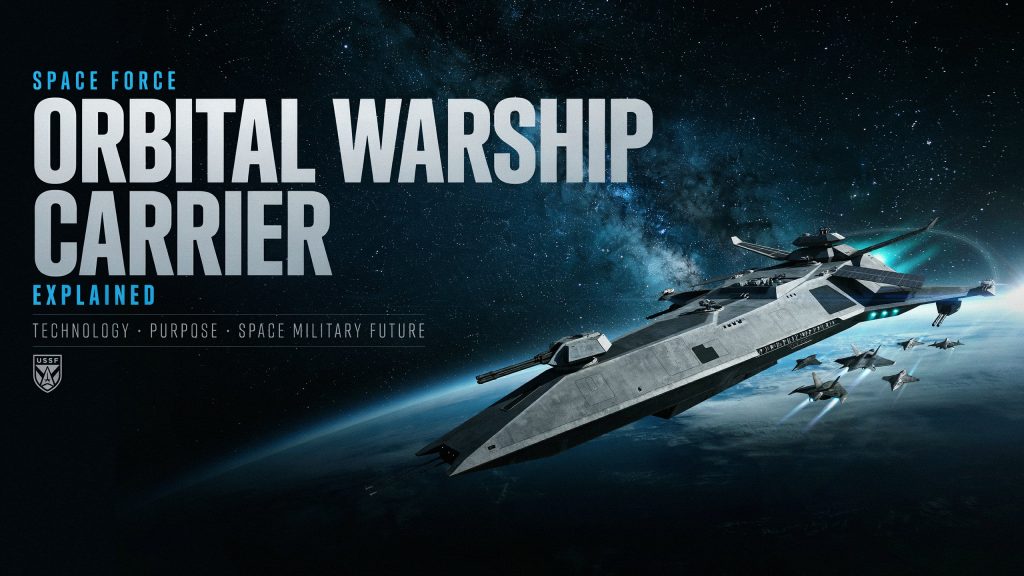
A future orbital carrier concept, if it ever moved beyond theory, would likely start as a modular logistics or servicing platform rather than a classic warship. It would probably focus first on support tasks such as sensor hosting, refueling, inspection, and deployment. That is the clearest path that fits existing public missions, current acquisition patterns, and the legal limits of the space environment.
While military space operations continue to evolve, aviation incidents such as Delta Flight DL275 Diverted LAX highlight how modern transportation systems rely on rapid decision-making, safety protocols, and advanced operational monitoring.


